Ants are fascinating creatures when observed in nature, but they become unwelcome guests when they invade your kitchen. These tiny invaders can quickly become a nuisance, marching in lines across your countertops and finding their way into your food supplies. While there are many commercial products available to tackle this problem, they often come with harsh chemicals and a hefty price tag.
Fortunately, there are simpler and more natural methods to deal with an ant invasion. My grandmother, a woman with a knack for practical and eco-friendly solutions, shared with me a trick that has been passed down through generations. This method not only eliminates ants effectively but does so with almost no effort on your part. Let me walk you through how this simple solution can help you reclaim your kitchen from ants.
1. The Day Ants Took Over My Kitchen
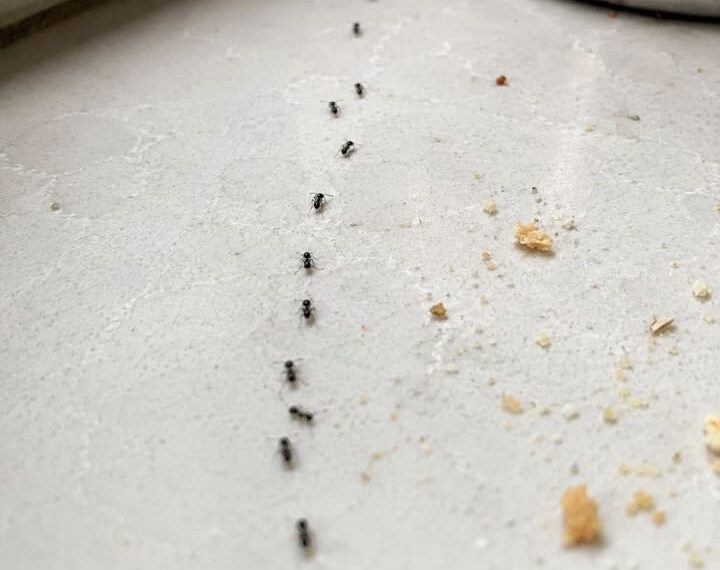
It was an ordinary morning, and as I walked into my kitchen to prepare breakfast, I noticed a long line of ants trailing from the window sill to the pantry. They had discovered a small crack in the window and were making their way to a forgotten crumb on the counter. Despite my attempts to clean the kitchen regularly, these persistent insects had found their way in.
With the ants steadily increasing in number, I knew I needed a solution fast. I tried wiping them away and sealing the crack, but they kept finding new entry points. The situation seemed to be getting out of hand, and I was hesitant to resort to chemical sprays that could leave residues near where I prepared food. That’s when I remembered my grandmother’s advice.
2. My Grandmother’s Surprisingly Simple Ant Trick
My grandmother always believed in using natural ingredients to solve household problems. Her trick for getting rid of ants was as simple as it was effective: a mixture of vinegar and water. She would mix equal parts of white vinegar and water in a spray bottle and use it to clean the surfaces where ants were present.
The smell of vinegar masks the pheromone trails that ants use to navigate, effectively disrupting their communication and making them lose their way. This simple solution not only deters ants but also cleans and sanitizes the surfaces, making it a multi-purpose remedy.
3. Why This Method Works Without Any Effort
The beauty of this method lies in its simplicity and the natural properties of vinegar. Ants rely heavily on scent trails to find food and communicate with each other. By erasing these trails, vinegar effectively confuses the ants and prevents them from regrouping.
Moreover, vinegar’s strong odor is a natural repellent for ants. Unlike chemical solutions, vinegar is safe to use on kitchen surfaces and does not pose a risk to food safety. This makes it an ideal choice for those who prefer a natural, non-toxic approach.
4. The One Ingredient You Probably Already Have at Home
The best part about my grandmother’s trick is that it relies on a household staple that you likely already have: white vinegar. This versatile ingredient is commonly used for cooking, cleaning, and various home remedies, making it a convenient and cost-effective solution.
In addition to its effectiveness against ants, vinegar has antibacterial properties that make it an excellent cleaner for kitchens and other areas of the home. Its availability and multiple uses make it a must-have in any household.
5. Step-By-Step: How To Set Up The No-Effort Ant Barrier
Creating the vinegar solution is a straightforward process. Simply mix equal parts of white vinegar and water in a spray bottle. Shake well to ensure the mixture is combined.
Once your solution is ready, spray it generously along the paths where you’ve noticed ants. Pay special attention to entry points such as windowsills, door frames, and any cracks or crevices where ants might be entering. Repeat this process daily or as needed to keep ants at bay.
6. Where To Place It So Ants Disappear Fast
The key to success with this method is to identify and target the ants’ entry points. Common areas include windowsills, doorframes, and any gaps in walls or floors. By spraying these areas, you cut off the ants’ access to your kitchen.
Additionally, you can use the vinegar solution to wipe down countertops, pantry shelves, and other surfaces where ants have been spotted. This not only deters ants but also leaves your kitchen clean and fresh.