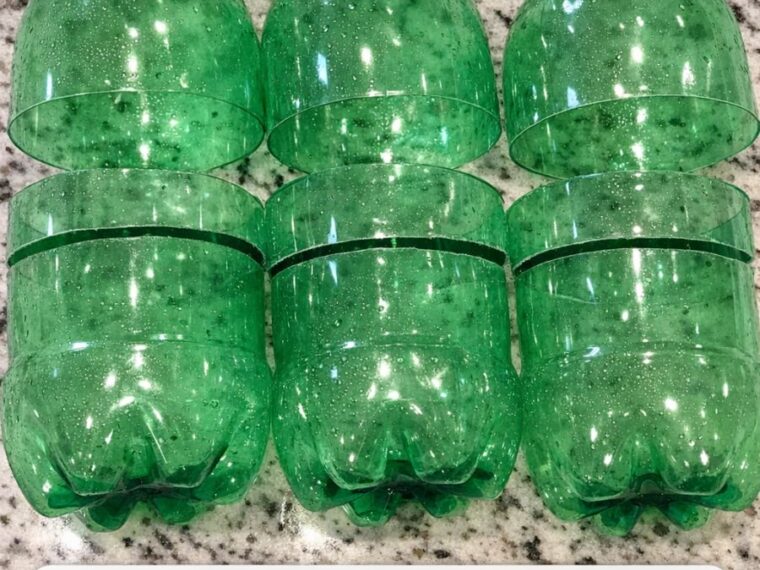
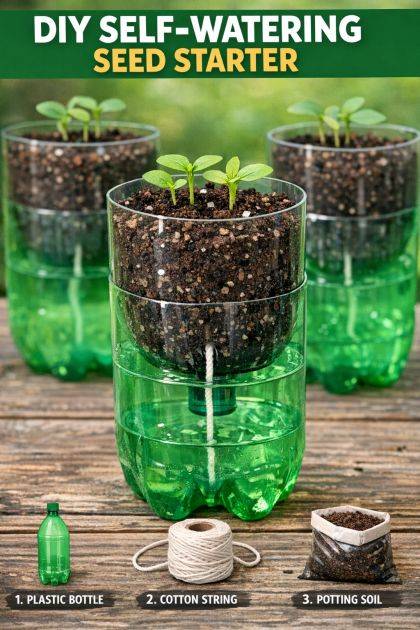
This DIY self-watering seed starter is a sustainable gardening solution that repurposes common household waste into a functional tool for gardeners. By utilizing empty green plastic soda bottles and two everyday household scraps, you create an efficient seed starting system that maintains consistent moisture levels, saving water and ensuring your seeds germinate successfully. This clever design is particularly useful in dry seasons or for gardeners who travel frequently, as it reduces the need for daily watering.
This self-watering seed starter fits beautifully into any modern or rustic garden setting. It’s perfect for starting a variety of plants such as vegetables (like tomatoes and peppers), herbs (like basil and cilantro), or even flowers (like marigolds and zinnias). Place these seed starters in raised beds, containers, or along garden borders to create a seamless transition from seedling to full growth. The green plastic blends subtly with foliage, offering a harmonious and eco-friendly aesthetic.
Green Plastic Bottle Self-Watering Seed Starter
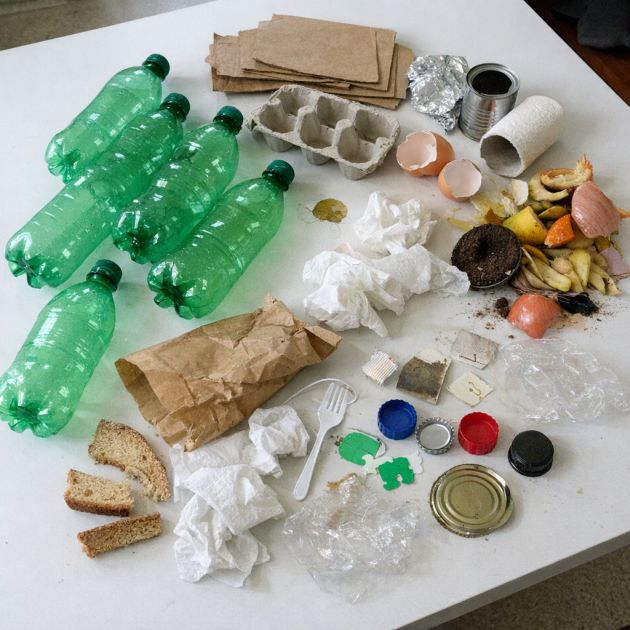
Materials
3 empty green 2-liter plastic soda bottles
3 pieces of absorbent cloth, approximately 4 inches by 4 inches each
3 small scoops of potting soil
Scissors or a craft knife
Awl or a small sharp tool for making holes
Directions
1. Cut each 2-liter plastic bottle in half horizontally, creating two separate parts: the top with the spout and the bottom.
2. Using an awl or sharp tool, carefully make a small hole in the center of each bottle cap.
3. Thread a piece of absorbent cloth through the hole in the cap, leaving half of the cloth inside the cap and the other half hanging out.
4. Screw the cap back onto the bottle spout, ensuring the cloth is securely threaded through.
5. Fill the bottom half of the bottle with water, about halfway full.
6. Invert the top half of the bottle and insert it into the bottom half, creating a funnel effect with the spout pointing down.
7. Fill the top half of the bottle (now acting as a planter) with potting soil, ensuring the cloth wick is buried within the soil to allow water absorption.
8. Plant your seeds in the soil according to their planting depth and spacing requirements.
Variations & Tips
For variations, consider using different types of absorbent materials like cotton rope or felt strips for the wicking system. Experiment with various sizes of bottles to accommodate different plant sizes or garden aesthetics. In colder climates, start seeds indoors using sunlight from a south-facing window, while in warmer regions, these starters can be used directly outdoors. For a decorative touch, paint the bottles with non-toxic paint or wrap them in jute twine. Adapt the soil mixture to suit specific plant needs, like adding perlite for better drainage or compost for added nutrients.