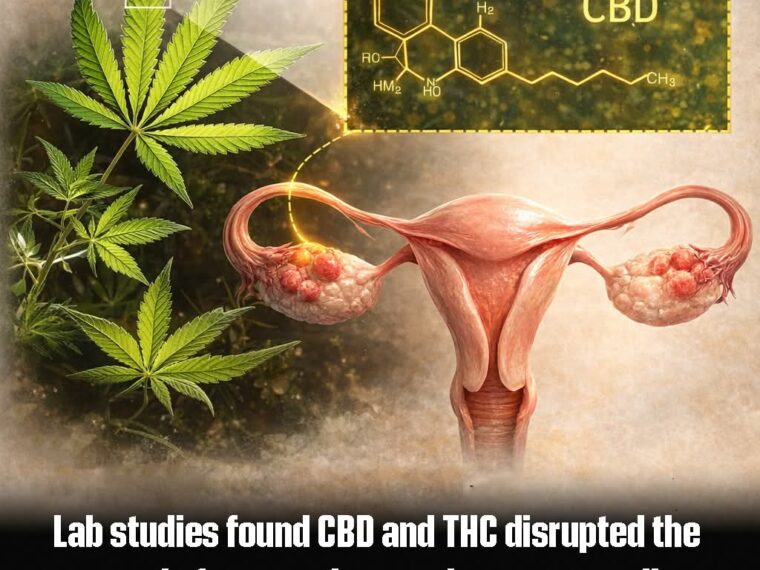
Researchers have observed something unexpected in the lab: CBD and THC didn’t just affect cancer cells — they interfered with how those cells spread. 🧬🌿
In controlled laboratory studies, scientists watched these cannabis-derived compounds disrupt colony formation in ovarian cancer cells, a process closely linked to how aggressive cancers grow and migrate. Ovarian cancer is among the most lethal forms of cancer, largely because it spreads silently and rapidly.
What stood out wasn’t elimination — but interruption.
The compounds appeared to slow the ability of cancer cells to organize, expand, and establish new colonies. In cancer research, that matters, because stopping spread can be just as critical as stopping growth.
Researchers are clear about one thing:
this is early-stage, laboratory research, not a treatment, not a cure, and not a clinical recommendation. The results come from controlled environments — not human trials.
But findings like this still matter.
They help scientists understand new biological pathways, open doors for future drug development, and challenge assumptions about where potential medical tools might come from.
For now, the takeaway is measured but important:
a plant-derived compound showed the ability to interfere with one of cancer’s most dangerous behaviors — spread.
Science moves forward one careful step at a time.
And sometimes, those steps begin in unexpected places.
Shared for informational purposes only.
Researchers have observed something unexpected in the lab