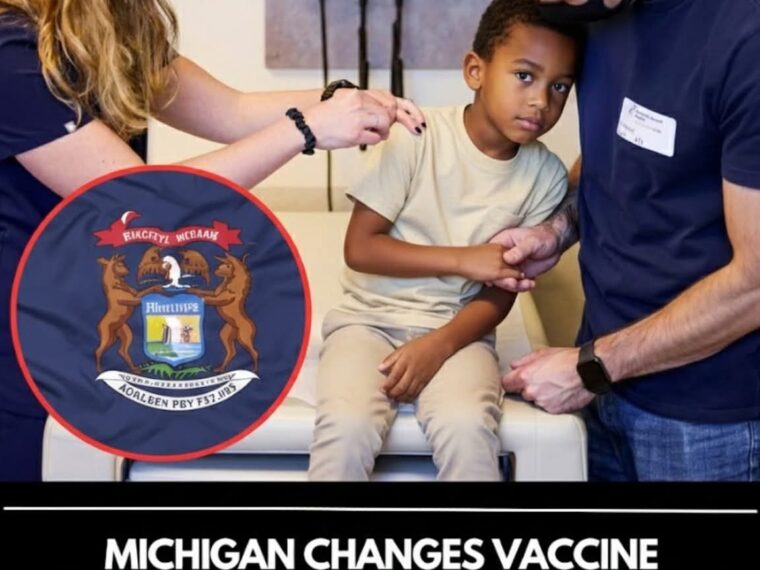
Michigan Revises Vaccine Guidance, Shifting Emphasis Toward Professional Medical Organizations
Health officials in Michigan have updated vaccine guidance for healthcare providers, signaling a move away from relying primarily on a federal advisory committee and toward greater use of recommendations issued by established professional medical organizations. The change reflects broader concerns about consistency, scientific transparency, and maintaining public confidence in immunization guidance.
The revised approach encourages clinicians to more prominently reference immunization schedules and recommendations published by groups such as the American Academy of Pediatrics (AAP) and the American Academy of Family Physicians (AAFP)—organizations that play a central role in everyday clinical practice across the United States.
Why the Guidance Is Changing
State health leaders say the shift is not a rejection of federal science, but rather an effort to ensure that providers have access to clear, consistent, and trusted sources that align closely with how care is delivered on the ground.
Concerns cited by officials include:
- Variability in messaging between different advisory bodies
- Confusion among providers and patients
- Growing public skepticism toward health institutions
- The need for practical guidance that integrates smoothly into routine care
By emphasizing organizations deeply embedded in clinical practice, Michigan officials aim to strengthen confidence in vaccination recommendations among both healthcare professionals and the public.
The Role of AAP and AAFP
The American Academy of Pediatrics and the American Academy of Family Physicians are widely respected professional organizations that:
- Publish regularly updated, evidence-based immunization schedules
- Base recommendations on large clinical datasets
- Rely on peer-reviewed research
- Reflect long-standing medical consensus
These schedules are already used daily by pediatricians, family physicians, and primary care providers nationwide, making them familiar and accessible tools for patient care.
State leaders note that this practical familiarity is a key reason for elevating these sources in official guidance.
Federal vs. State Decision-Making
The update highlights ongoing tension between federal advisory bodies and state-level health authorities over how public health policy is communicated and implemented.
While federal committees traditionally provide nationwide recommendations, states are responsible for:
- Translating guidance into practice
- Communicating with local providers
- Addressing regional concerns and public sentiment
As public skepticism around vaccines and health institutions has grown in recent years, several states are reassessing how best to present vaccine guidance in a way that supports trust without compromising scientific rigor.
Implications for Healthcare Providers
For clinicians in Michigan, the revised guidance:
- Reinforces the use of familiar professional resources
- Aims to reduce conflicting messages
- Supports consistency in patient counseling
Providers are still expected to practice evidence-based medicine, but with greater flexibility in how authoritative guidance is referenced and communicated.
Public Health Experts Stress the Importance of Clarity
Public health experts emphasize that clear, consistent, science-driven messaging is essential to:
- Maintaining vaccination rates
- Preventing outbreaks of vaccine-preventable diseases
- Preserving public trust in healthcare systems
They caution that confusion—regardless of its source—can undermine immunization efforts, especially in communities already hesitant about vaccines.
A Potential Model for Other States
Michigan’s policy change may influence how other states approach vaccine guidance in the future. As states navigate evolving public attitudes and political pressures, many are exploring ways to balance federal recommendations with trusted professional organizations and local decision-making.
Whether this approach improves clarity and confidence will likely be closely watched by public health officials nationwide.
Final Thoughts
Michigan’s revised vaccine guidance reflects a broader effort to strengthen trust, transparency, and consistency in public health communication. By emphasizing well-established medical organizations alongside federal science, the state aims to support clinicians while reinforcing evidence-based immunization practices.
As debates around health policy continue, the success of such changes may depend less on where guidance originates—and more on how clearly, consistently, and responsibly it is communicated.