How to Grow a Clove Tree From Seed: A Complete Guide With Pro Tips
Growing a clove tree from seed is a rewarding long-term project.
Cloves, the aromatic flower buds used in cooking, come from Syzygium aromaticum, a tropical evergreen tree native to the Maluku Islands of Indonesia.
Although it requires patience and the right conditions, starting your own tree from seed is absolutely possible with careful attention.
- Understanding Clove Seeds
Clove seeds do not remain viable for long.
They must be planted fresh—ideally within a few days of harvest. Dried clove “seeds” sold in stores cannot germinate; they are the dried flower buds, not seeds.
Pro Tip:
If your seeds feel hard and dry, they’re dead.
Fresh clove seeds are soft, slightly plump, and usually still moist. - Preparing the Seeds
Before planting, you’ll need to prepare the seeds properly:
Steps:
Gently wash away any remaining fruit pulp.
Soak the seeds in lukewarm water for 6–12 hours to encourage early sprouting.
Discard any floating seeds—they are likely non-viable.
Pro Tip:
Clove seeds often begin germinating inside their fruit.
If you see a tiny root emerging, plant it immediately without disturbing the root. - Choosing the Right Growing Medium
Clove trees thrive in a medium that holds moisture but drains well.
Recommended mix:
50% rich compost or coco peat
30% sand or perlite
20% garden soil
The medium should feel light and slightly spongy.
Pro Tip:
Avoid heavy, clay soils. Cloves are extremely sensitive to poor drainage and can rot easily. - Planting the Seeds
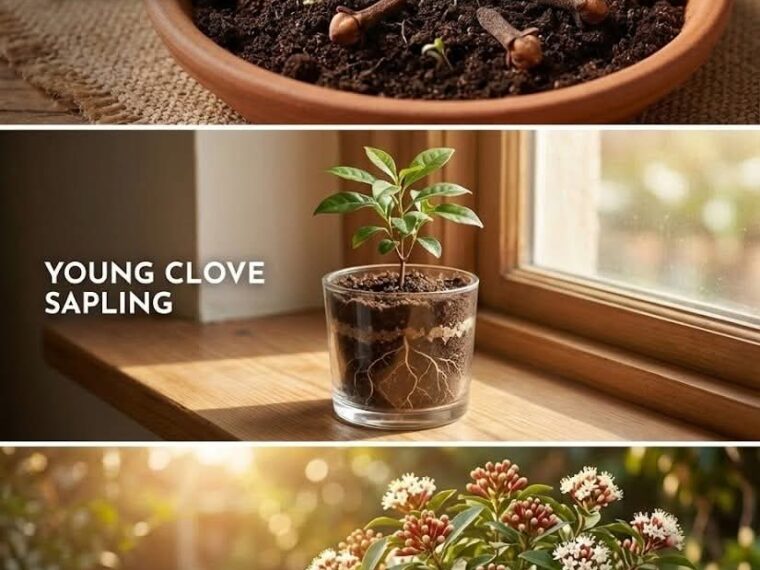
Plant clove seeds about 1 inch (2.5 cm) deep with the pointed end facing upward if visible.
Best conditions:
Moist (but not soggy) soil
Shade or filtered sunlight
Warm temperatures: 75–90°F (24–32°C)
High humidity
Pro Tip:
Cover the pot with a clear plastic dome or bag to maintain humidity.
Just make sure to allow occasional airflow to prevent mold. - Caring for Seedlings
Clove seedlings grow slowly at first. Expect sprouting in 2–6 weeks.
Seedling care:
Keep the soil consistently moist.
Provide dappled or indirect light.
Maintain warm temperatures—avoid cold drafts.
Mist occasionally to keep humidity high.
Pro Tip:
Do not place young seedlings in direct sun.
They burn easily at this stage. - Transplanting Young Clove Trees
Once seedlings are 4–6 months old and have several true leaves, you can transplant them into larger pots.
Potting tips:
Choose deep containers (their roots grow downward).
Use the same well-draining soil mix.
Gradually introduce more light, but avoid full sun.
Pro Tip:
Clove trees prefer slightly acidic soil (pH 5.5–6.5). If your soil is alkaline, amend with peat moss or composted pine bark. - Long-Term Care and Growth Expectations
Clove trees are slow-growing but eventually reach 20–40 feet in optimal conditions.
What they need long-term:
Warm, humid climate year-round
Partial sun to gentle full sun
Regular watering
Organic fertilizer every 6–8 weeks
They begin producing cloves after 4–7 years.
Pro Tip:
Mulch heavily around the base—not against the trunk—to maintain moisture and regulate soil temperature. - Common Problems and How to Avoid Them
Root Rot
Usually caused by soggy soil. Always ensure excellent drainage.
Leaf Burn
Occurs from full, intense sunlight. Provide filtered light.
Slow Growth
Cloves grow slowly by nature. Inadequate warmth or humidity can slow them even more.
Pro Tip:
A humidity level above 60% dramatically improves growth—use a humidifier indoors if needed.
Final Thoughts
Growing a clove tree from seed requires patience, warmth, and consistent care, but the process is surprisingly straightforward once you understand the plant’s needs.
With the right environment and a bit of dedication, you can raise a beautifully aromatic evergreen tree that eventually produces its own spice buds—an impressive addition to any tropical or indoor garden.