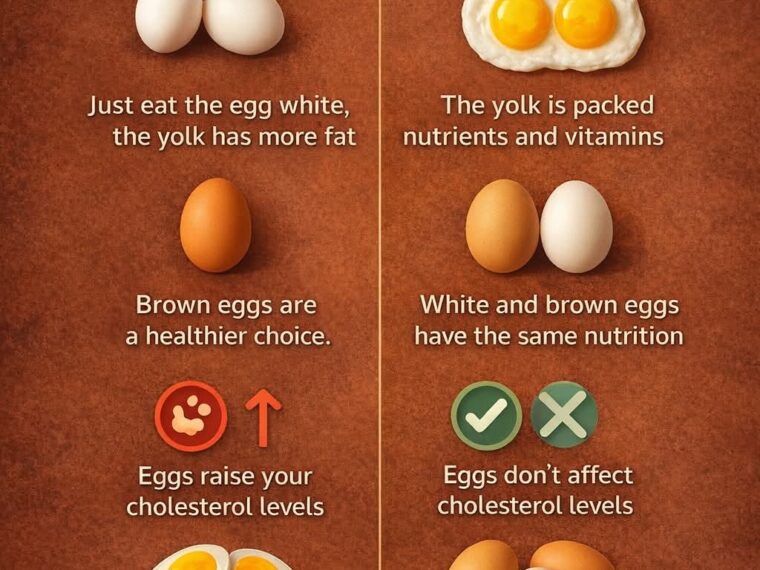
🥚 Egg Myths Busted: Facts Taste Better Than Fear
Eggs have been unfairly feared for decades. One day they’re a “perfect food,” the next they’re blamed for heart disease, high cholesterol, or weight gain. The truth? Most of what you’ve heard about eggs is outdated or simply wrong.
Let’s bust the biggest egg myths and replace fear with facts—because good nutrition should taste better than worry.
Myth 1: Eggs Are Bad for Your Heart ❤️
The truth: For most people, eggs do not increase heart disease risk.
Eggs contain cholesterol, but dietary cholesterol has far less impact on blood cholesterol than once believed. Research shows that in healthy individuals:
- Eggs do not significantly raise LDL (“bad”) cholesterol
- They often increase HDL (“good”) cholesterol
- They improve overall cholesterol balance
For the majority of people, eggs can be part of a heart-healthy diet.
Myth 2: You Should Only Eat Egg Whites
The truth: The yolk is where most of the nutrition lives.
Egg yolks contain:
- Vitamins A, D, E, and K
- Choline (essential for brain and liver health)
- Antioxidants like lutein and zeaxanthin
Egg whites provide protein, but skipping the yolk means missing out on powerful nutrients.
Myth 3: Eggs Raise Cholesterol for Everyone
The truth: Only a small percentage of people are “hyper-responders.”
About 20–30% of people experience a rise in blood cholesterol from dietary cholesterol—but even in those cases:
- Both LDL and HDL rise
- The LDL particles become larger and less harmful
For most people, eggs have little to no negative effect.
Myth 4: Brown Eggs Are Healthier Than White Eggs
The truth: Shell color has nothing to do with nutrition.
The color of an egg depends on the breed of the hen—not the quality or nutrient content. Brown eggs often cost more simply because:
- Brown-egg-laying hens are larger
- They require more feed
Nutritionally, brown and white eggs are nearly identical.
Myth 5: Eggs Make You Gain Weight ⚖️
The truth: Eggs can actually help with weight management.
Eggs are:
- High in protein
- Very filling
- Low in calories
Eating eggs for breakfast has been shown to:
- Reduce hunger later in the day
- Lower overall calorie intake
- Support muscle maintenance
Weight gain comes from excess calories—not eggs.
Myth 6: Raw Eggs Are Healthier
The truth: Cooked eggs are safer and more nutritious.
Cooking eggs:
- Improves protein absorption
- Reduces the risk of foodborne illness
- Makes nutrients easier to digest
Raw eggs also contain avidin, which can block biotin absorption when eaten frequently.
Myth 7: Eggs Are Bad for Diabetics
The truth: Eggs can be a smart protein choice.
When eaten as part of a balanced meal:
- Eggs do not spike blood sugar
- They provide stable energy
- They help control appetite
Portion size and overall diet matter far more than eggs alone.
Why Eggs Deserve a Place on Your Plate
Eggs are one of the most nutrient-dense foods available:
- Complete protein with all essential amino acids
- Affordable and accessible
- Versatile and easy to prepare
They support:
- Brain health
- Eye health
- Muscle strength
- Immune function
How Many Eggs Are Safe?
For most healthy people:
- 1–2 eggs per day is perfectly safe
- Even more may be fine depending on lifestyle and activity level
If you have specific medical conditions, personalized advice is best.
Final Thoughts
Eggs are not the enemy—they’re a nutritional powerhouse misunderstood for years. Science continues to show that fear around eggs is largely unnecessary, and when enjoyed in moderation, they can be part of a healthy, balanced diet.
So crack the egg myths, trust the facts, and enjoy the flavor.
Because facts taste better than fear. 🥚
Disclaimer
This article is for informational purposes only and does not replace professional medical or nutritional advice.