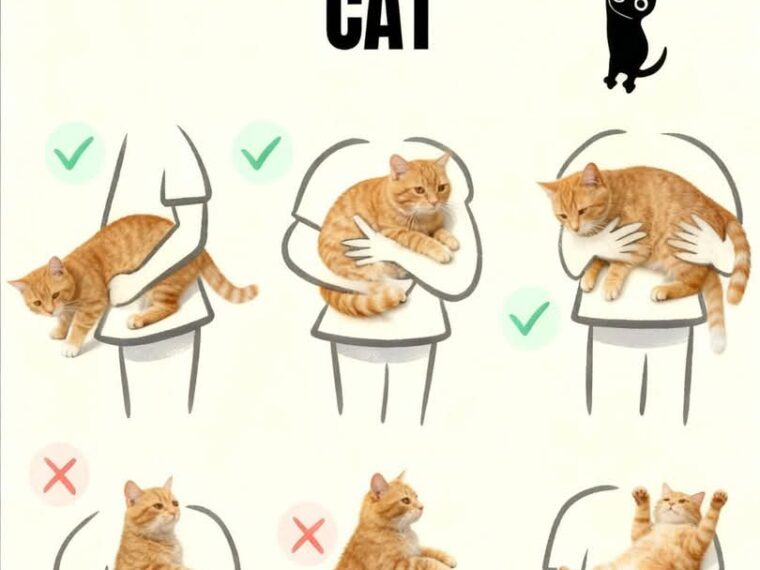
❌ Never lift a cat by the scruff
❌ Never hold only the front legs
❌ Never let the hind legs dangle
❌ Never force a cat to be held
❌ Never grab the tail or under the armpits
These actions can cause pain, fear, and injury.
Special Tips for Kittens, Seniors, and Injured Cats
Kittens
- Always support the entire body
- Keep handling sessions short
Senior Cats
- Be gentle with joints and spine
- Lift slowly and smoothly
Injured or Arthritic Cats
- Avoid lifting unless necessary
- Follow veterinary guidance
How to Help Your Cat Feel Comfortable Being Carried
- Start with short holding sessions
- Reward calm behavior with treats
- Keep your movements slow and quiet
- Put them down immediately if they struggle
Trust builds over time.
When You Should Not Carry Your Cat
- After a traumatic event
- During aggressive or fearful behavior
- If they are sick or in pain (unless necessary)
In these cases, use a carrier or towel wrap instead.
Conclusion
Carrying your cat correctly is about support, respect, and trust. When you fully support their body and pay attention to their comfort, your cat feels safe rather than trapped. Every cat is different — the key is learning what your cat tolerates and enjoys.
Handled properly, being picked up can become a calm, bonding experience instead of a stressful one.
Pages: 1 2