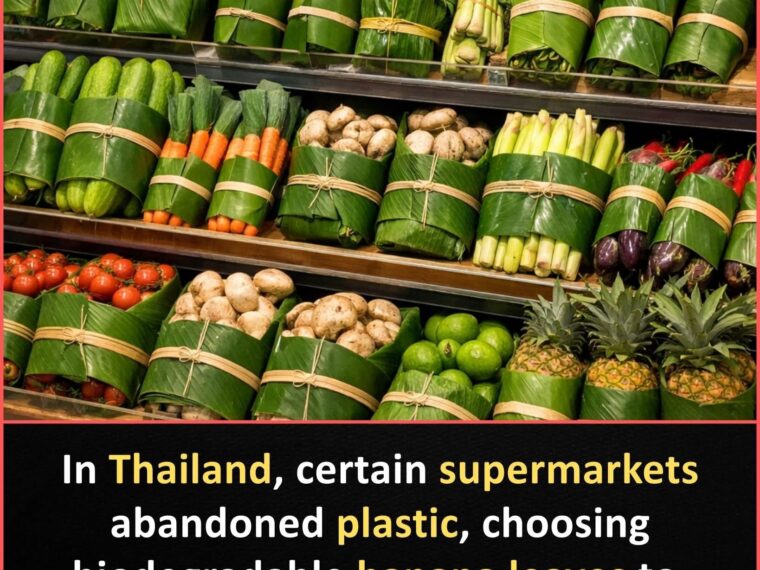
In Thailand, some supermarkets made a quiet yet powerful shift by abandoning plastic packaging altogether. Instead of synthetic wraps, they began using biodegradable banana leaves to package fresh fruits and vegetables—an age-old, natural solution revived for modern sustainability.
This small change created a big impact. Banana leaves decompose naturally, reduce waste instantly, and return to the earth without harm. By blending tradition with responsibility, these stores proved that innovation doesn’t always mean something new—sometimes, it means remembering what always worked best.
A Simple Leaf Replaced a Lifetime of Plastic
How Banana Leaves in Thailand Are Redefining Sustainable Packaging
In a world overwhelmed by plastic waste, sometimes the most effective solutions are not new inventions, but forgotten traditions. In Thailand, a quiet yet meaningful shift has taken place—one that shows how simplicity can challenge a global environmental crisis.
Several supermarkets across the country began replacing plastic packaging with banana leaves, a natural, biodegradable alternative that had been used for centuries before plastic existed. This decision, while modest on the surface, has made a significant environmental impact.
The Plastic Problem We Can No Longer Ignore
Plastic packaging has become a symbol of modern convenience—and modern pollution.
- Single-use plastics can take hundreds of years to decompose
- They clog waterways, harm wildlife, and contaminate soil
- Recycling systems cannot keep up with the volume produced
Even fruits and vegetables—items that already come with natural protection—are often wrapped in unnecessary plastic.
Rediscovering an Old Solution
Long before plastic bags and cling wrap, banana leaves were used throughout Southeast Asia to:
- Wrap food
- Carry produce
- Steam and preserve meals
They are:
- Flexible
- Naturally waterproof
- Strong enough to protect produce
- Completely biodegradable
Thai supermarkets didn’t invent something new—they remembered what worked.
How Supermarkets Made the Switch
Instead of plastic trays and wraps, fresh fruits and vegetables were:
- Bundled with banana leaves
- Tied with natural fibers
- Displayed in clean, simple arrangements
The result was visually striking, culturally meaningful, and environmentally responsible.
Customers responded positively, appreciating:
- Reduced plastic waste
- Fresher-looking produce
- A return to traditional values
Why Banana Leaves Work So Well
🌿 1. Fully Biodegradable
Banana leaves decompose naturally within weeks, returning nutrients to the soil.
🌿 2. Zero Toxic Waste
Unlike plastic, they do not release microplastics or harmful chemicals.
🌿 3. Locally Available
Banana trees grow abundantly in Thailand, making the leaves inexpensive and renewable.
🌿 4. Lower Carbon Footprint
No factories, no fossil fuels, no long-distance transport.
A Cultural and Environmental Win
This initiative did more than reduce waste—it reconnected modern consumers with cultural heritage. What once seemed “old-fashioned” became innovative again.
By blending tradition with responsibility, these supermarkets showed that:
- Sustainability can be practical
- Eco-friendly choices don’t need to be expensive
- Cultural knowledge holds powerful answers
Small Change, Big Impact
While one banana leaf may seem insignificant, multiplied across thousands of daily purchases, the impact becomes clear:
- Tons of plastic eliminated
- Cleaner streets and waterways
- Reduced landfill waste
- Increased awareness among consumers
Change doesn’t always start loudly—it often begins quietly, with intention.
Can This Work Elsewhere?
While banana leaves are ideal in tropical regions, the concept can inspire global alternatives:
- Corn husks
- Palm leaves
- Reusable cloth wraps
- Compostable plant-based packaging
The lesson is universal: nature already provides solutions—we just need to respect them.
Final Thoughts
A simple leaf replaced a lifetime of plastic—not through technology, but through wisdom. Thailand’s use of banana leaves reminds us that sustainability is not always about moving forward faster, but sometimes about looking back thoughtfully.
Innovation doesn’t always mean creating something new.
Sometimes, it means remembering what the Earth has offered all along.