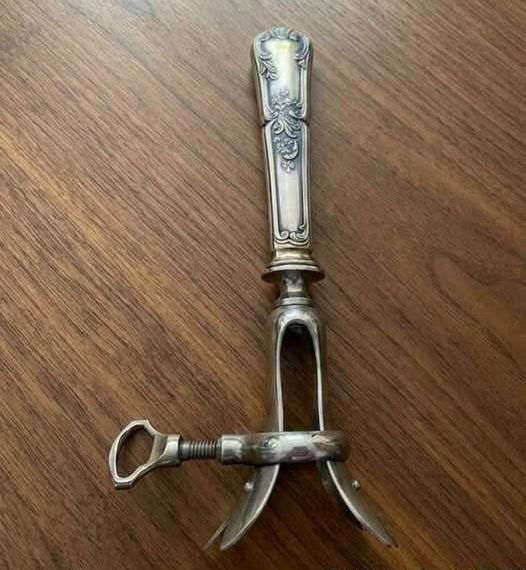
At first glance, this unusual metal object looks like something from a medieval workshop. With its decorative handle, curved metal arms, and adjustable screw, it’s easy to understand why so many people are puzzled by it.
But this mysterious object may have a surprisingly practical purpose.
A Closer Look at the Unusual Design
The object features an ornate metal handle, a central opening, two curved arms, and a small screw mechanism.
These details suggest that it was designed to grip, hold, or spread something while allowing the user to control the pressure.
Its decorative appearance also suggests that it may have been made during a period when everyday household tools were designed to look elegant.
What Was This Tool Used For?
Continue reading on the next page →
Although its exact identity cannot be confirmed from the photograph alone, the object resembles an antique mechanical gripping or spreading device.
The adjustable screw appears to control the movement of the curved arms, while the long handle provides leverage.
Depending on its original design, a tool like this might have been used for a specialized household, workshop, or professional task.
However, without identifying marks, measurements, or additional photographs, assigning it a specific historical function would be speculation.
Why Were Antique Tools So Elaborate?
During the 19th and early 20th centuries, many household and professional implements featured decorative metalwork.
Even practical objects could have engraved handles, floral patterns, and polished finishes.
These details sometimes reflected the owner’s social status, the manufacturer’s craftsmanship, or the traditions of the period.
How Can You Identify an Antique Like This?
Continue reading on the next page →
Collectors often examine several details before identifying an unfamiliar object.
1. The Manufacturer’s Mark
Small stamps, initials, or engraved symbols may reveal where and when the object was made.
2. The Moving Parts
Understanding how the screw and curved arms operate can help determine the tool’s intended function.
3. The Materials
The object appears to have a silver-colored finish, but a photograph cannot establish whether it is silver, silver-plated metal, or another alloy.
4. Historical Catalogs
Old manufacturers’ catalogs and museum collections can help match unusual tools with documented examples.
The Fascination of Forgotten Objects
One of the most interesting things about antique tools is how ordinary they may once have been.
An object that seems completely mysterious today could have been familiar to people a century ago.
And sometimes, the smallest mechanical details provide the biggest clues.
Final Thoughts
This intriguing antique reminds us that many everyday objects from the past have disappeared from modern life.
Its ornate handle and unusual mechanism make it an especially interesting piece of history.
Have you ever seen something like this before? What do you think it was used for?