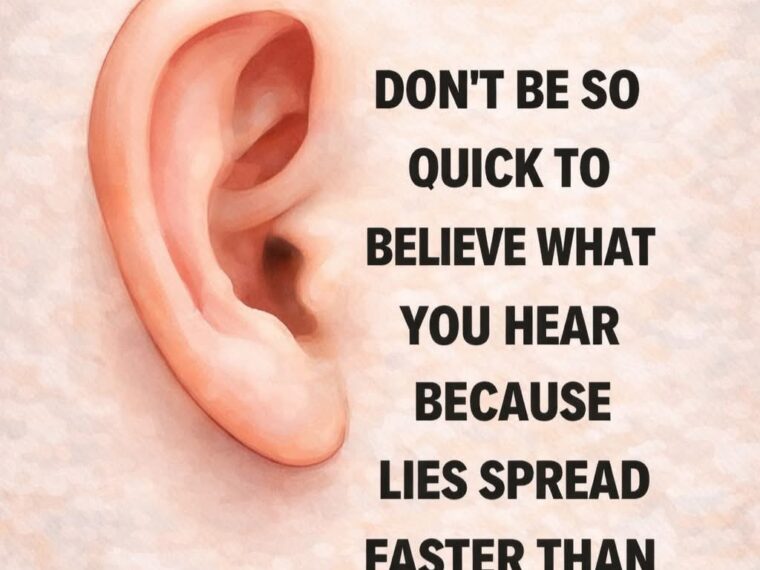
Don’t Be So Quick to Believe What You Hear — Lies Spread Faster Than the Truth
In an age where information travels faster than ever, believing the wrong thing has become dangerously easy. A rumor can circle the world in minutes, while the truth often struggles to catch up. This isn’t new—but the speed and scale at which misinformation spreads today makes discernment more important than ever.
Being careful about what we believe is not skepticism for the sake of doubt; it’s an act of responsibility.
Why Lies Travel Faster Than the Truth
Lies often spread quickly because they are designed to provoke emotion. Fear, outrage, shock, and curiosity make people react before they think.
The truth, on the other hand:
- Requires verification
- Often lacks drama
- Takes time to explain
- May be uncomfortable or complex
People share what moves them, not always what is accurate.
The Psychology Behind Believing False Information
Human brains are wired to seek patterns and certainty. When information fits our existing beliefs or fears, we’re more likely to accept it without question. This is known as confirmation bias.
Add social pressure, viral headlines, and emotional language—and critical thinking can easily be bypassed.
The Cost of Believing Too Quickly
Accepting false information can have real consequences:
- Damaged reputations
- Broken relationships
- Poor decisions
- Public panic or division
Once a lie takes hold, correcting it becomes exponentially harder—even when evidence is presented.
The Difference Between Hearing and Knowing
Hearing something does not make it true. Knowledge requires:
- Evidence
- Context
- Credible sources
- Willingness to question
True understanding often comes quietly, while falsehoods arrive loudly.
How to Protect Yourself From Misinformation
Pause Before Reacting
If something triggers a strong emotional response, stop. Emotion is often the entry point of manipulation.
Check the Source
Ask:
- Who is sharing this?
- What is their motive?
- Is the source reputable?
Look for Confirmation
One claim is not enough. Reliable information is supported by multiple independent sources.
Be Comfortable With “I Don’t Know”
Uncertainty is healthier than false certainty. Wisdom grows from patience.
Social Media and the Illusion of Truth
Repeated exposure can make false information feel true. Algorithms reward engagement, not accuracy, which means sensational lies are often amplified while nuanced truths are buried.
Popularity does not equal truth.
The Responsibility of the Listener
Truth isn’t only protected by those who speak it—it’s protected by those who listen carefully.
Every time we choose not to share unverified information, we slow the spread of falsehood. Silence, when intentional, can be an act of integrity.
Truth Takes Time, But It Endures
Lies burn fast and fade. Truth moves slower, but it leaves lasting foundations. History consistently shows that while false narratives rise quickly, they eventually collapse under their own weight.
Patience is one of truth’s greatest allies.
Final Thoughts
Don’t be so quick to believe what you hear. Not because everyone lies—but because truth deserves respect, time, and attention.
In a world full of noise, wisdom is choosing to listen carefully, think deeply, and speak responsibly.
Quote for Reflection
“Not everything that is heard should be believed, and not everything believed should be repeated.”